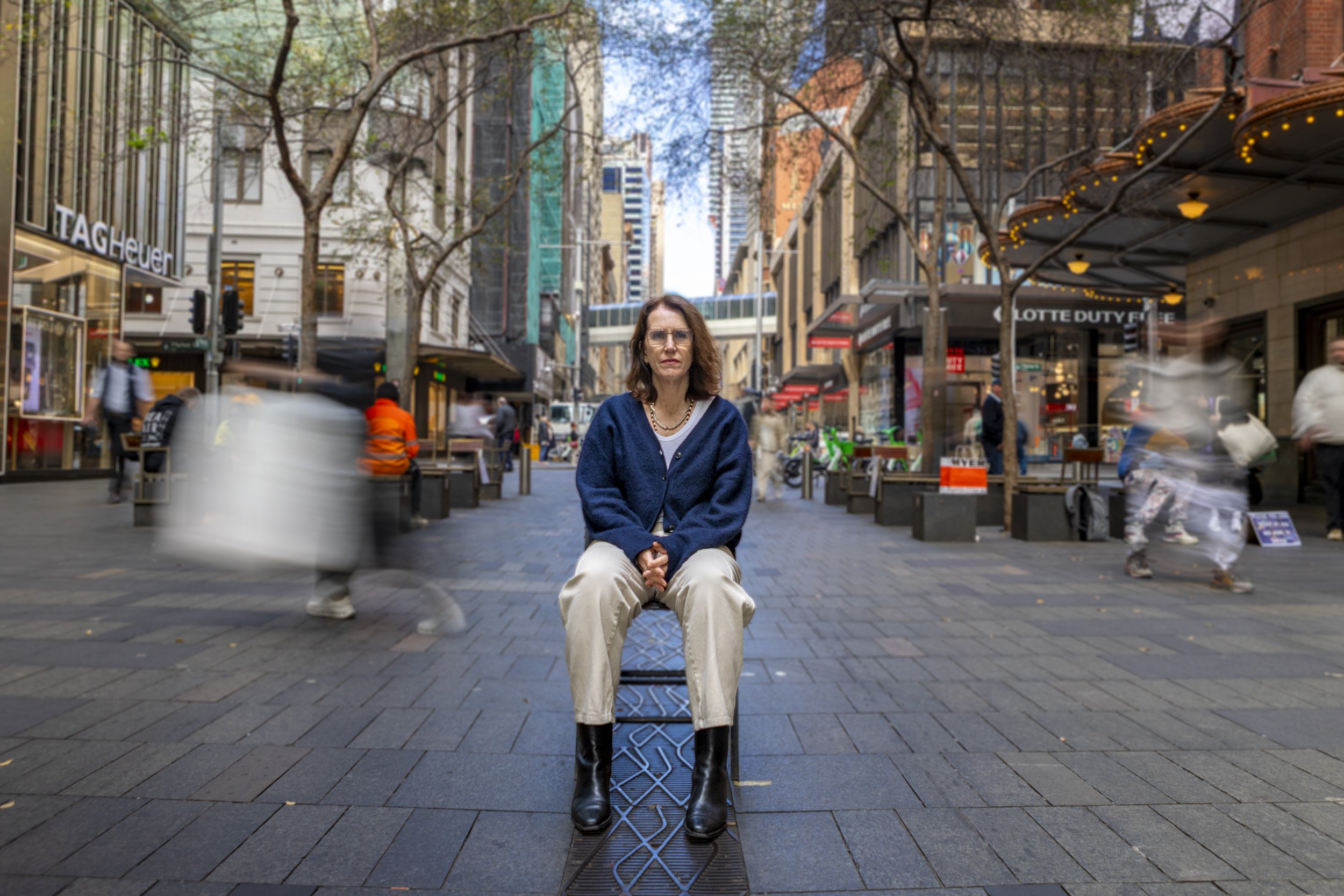
Joh Jarvis | Vedic Meditation Teacher
My first serious contemplation of death was nearly 30 years ago when my brother Sam killed himself. Up until then, death was abstract, something that happened to others, mostly old people, something I could deal with later.
But later came much sooner than I was prepared for.
Viewing my brother's corpse on a bench in an Adelaide funeral home—waxy skin, rigid limbs, unsmiling—made something real, yet incomprehensible. The figure resembled my 27-year-old sibling, but the brother I knew was unlocatable. His body remained; the essence of him was gone.
That dissonance dogged me, and alongside grief began an unrelenting quest to understand where we go when we die. Are we merely a beating heart, blood flow and brain waves? Or is there something beyond the material?
A few months before Sam died, I'd been with my grandmother in palliative care as she took her final breath. The change in her was instantaneous. Her body, for a while, stayed exactly as it had been when she was alive, nothing material had changed, yet the difference between alive and dead was unmistakable. Whatever had left her wasn't visible or measurable. It was only later, that I understood I'd already glimpsed a clue: if death could look identical to life for those first minutes, perhaps life was not the material fact I'd assumed.
To understand death further, I joined a Buddhist class simulating dying through visualization, the letting go of ego, the last breath, the corpse's decay. It was visceral, and made my own inevitable death far more real. But it didn't answer what mattered: where do we go, if anywhere?
I read books on near-death experiences, people describing dying but later "coming back" to life. In the death realm they often described celestial beings, white lights, tunnels, ‘a place’ they said they'd been before returning to ordinary life in their body. There was a remarkable consistency across the stories. I was curious, but not convinced.
Alongside the search was profound, lingering guilt about my brother. Why hadn't I tried harder to save him? The desperation bled into my sleep: night after night I dreamed he was on his skateboard, gliding away from me, fading until he vanished. The dream dogged me for years.
Ostensibly to cope, I learned Vedic Meditation. Initially while I wasn't drawn to the spiritual teachings I was deeply impressed with how much happier I felt. I noticed a growing sense of calm and expansiveness. I learned that the Vedic sages called this calm "Being," or "Pure Consciousness" and it was said to be timeless, everlasting, indestructible. I was open to the idea that something indestructible lived within me but I wasn't ready to let go of my scepticism completely.
But eventually, something changed. Years and years of closing my eyes for twenty minutes twice a day exposed me to what I now see as truth. I came to accept three things: Being exists; it is the core of everything; and it is indestructible.
I understood Being to be the life force I'd been trying to name since viewing Sam's corpse. It was the same thing I'd unknowingly glimpsed as it departed my grandmother's body. What I felt leaving her, and what was absent in Sam, was the same thing.
I can't prove this. But I no longer doubt it. If Being is the core of everything and cannot be destroyed, then when the body drops, Being continues. Death is the cessation of the individual form, not of Being itself. We are not, in the end, only a beating heart and blood flow. Those belong to the form.
This understanding changed my grief. I still miss Sam's physical presence. But I no longer experience his death simply as disappearance. The form that was him is gone. The Being that expressed itself through him, to me, is not. And the dream of him skating away no longer plagues me. Remembering it can still catch in my chest, but the feeling passes. I've made peace with his passing, I've made peace with what I can't prove. Yet there is something about the nature of life and death I now feel I deeply know.
—Joh Jarvis (2026)
Editor’s note: Joh Jarvis is an Australian-born, New York City–based Vedic Meditation teacher and founder of The Light Inside, a nonprofit dedicated to expanding access to meditation for incarcerated people and correctional staff across the United States. Growing up in Adelaide, Australia, Joh spent 23 years working in the media industry before dedicating her life to meditation. Since 2020, she has led immersive, multi-day meditation trainings inside the Rikers Island jail complex in New York—one of the largest and most challenging correctional environments in the United States. Through her work, Joh is committed to making meditation accessible in places where it is least expected and most needed. Her teaching is grounded in the belief that inner transformation is possible for everyone, and that meditation can be a powerful catalyst for healing, resilience and meaningful change. Further info: www.johjarvis.com
The Death Letter Project welcomes your comments and feedback. Please feel free to leave a comment on our Facebook page or alternatively submit a message below.