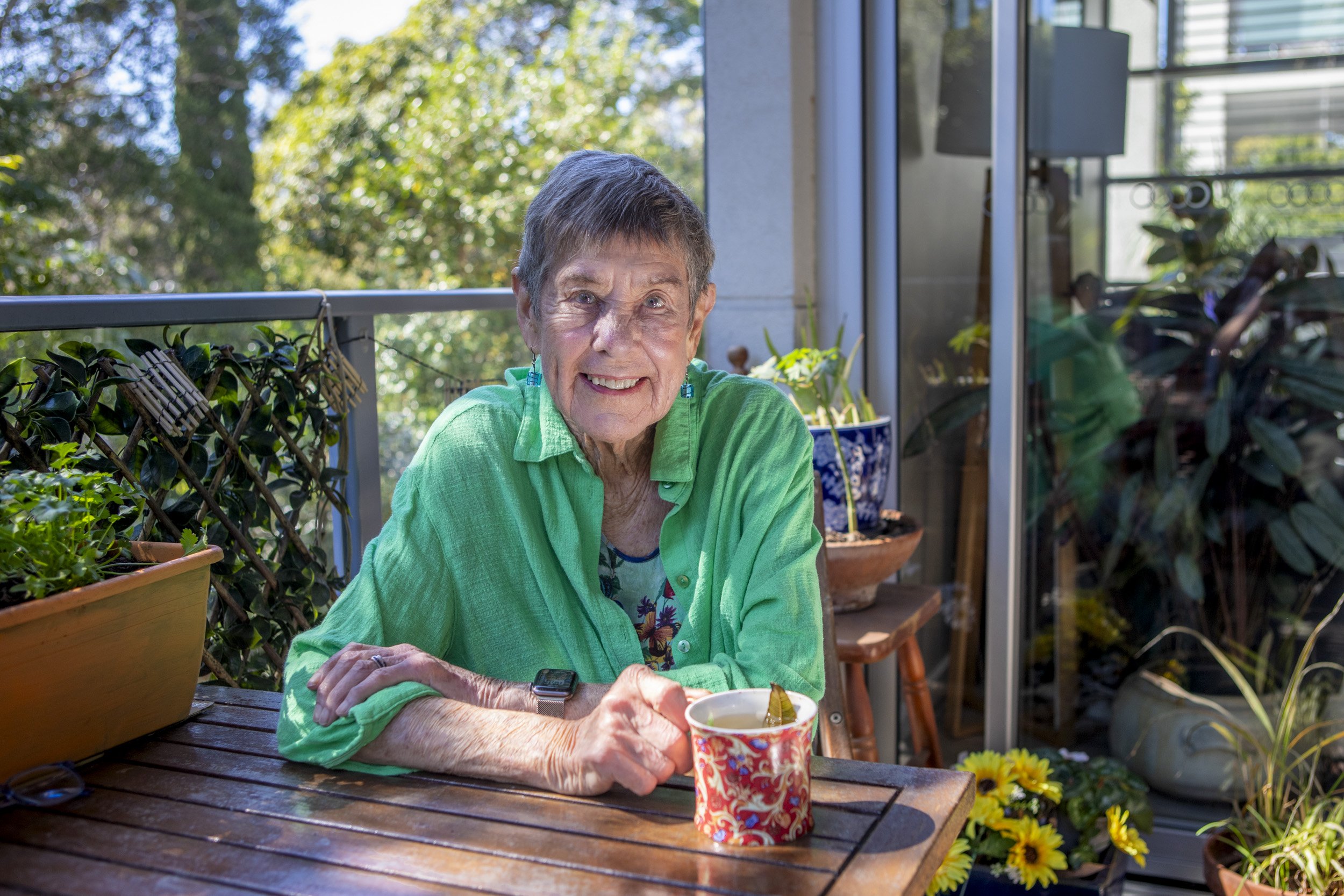
Jill Nash | Advocate for Ageing and Dying Well
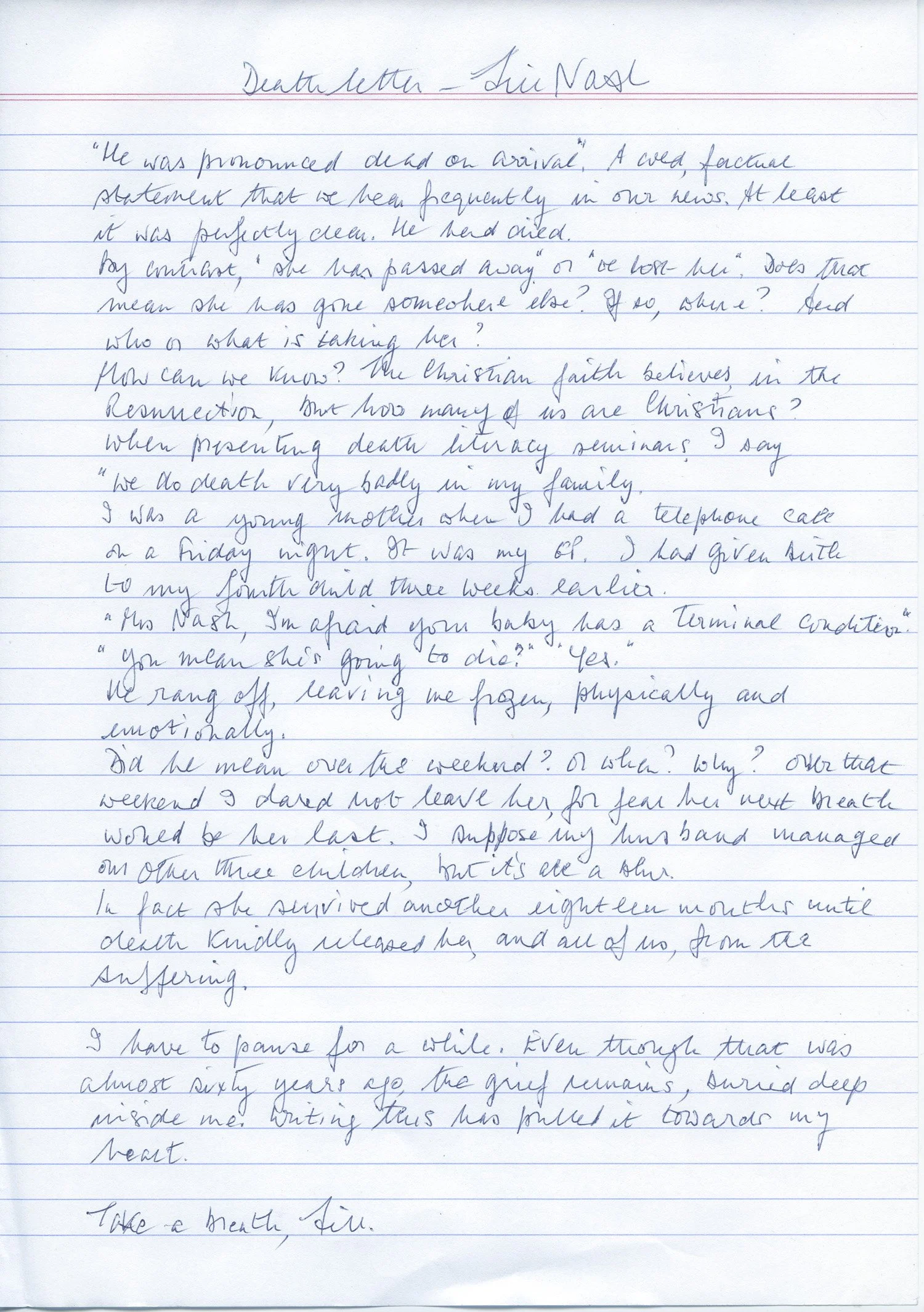
“He was pronounced dead on arrival.” A cold, factual statement that we hear frequently in our news. At least it was perfectly clear. He had died.
By contrast, “She has passed, passed away.” “We lost her…”. Does that mean she has gone somewhere else? If so, where? And who or what is taking her?
How can we know? The Christian faith believes in the Resurrection, but how many of us are Christians?
When presenting death literacy seminars I say “we do death very badly in my family”.
I was a young mother when I had a telephone call on a Friday night. It was my GP. I had given birth to my fourth child three weeks earlier. “Mrs Nash, I’m afraid your baby has a terminal condition.” “You mean, she is going to die?” “Yes.”
He rang off, leaving me frozen, physically and emotionally. Did he mean over the weekend? Or when? Why? Over that weekend I dared not leave her, for fear that her next breath would be her last. I suppose my husband managed our other three children, but it’s all a blur. In fact, she survived for another eighteen months, until death kindly released her, and all of us from the suffering.
I have to pause for a while. Even though that was almost sixty years ago, the grief remains, buried deep inside me. And writing this has pulled it towards my heart.
Take a breath, Jill.
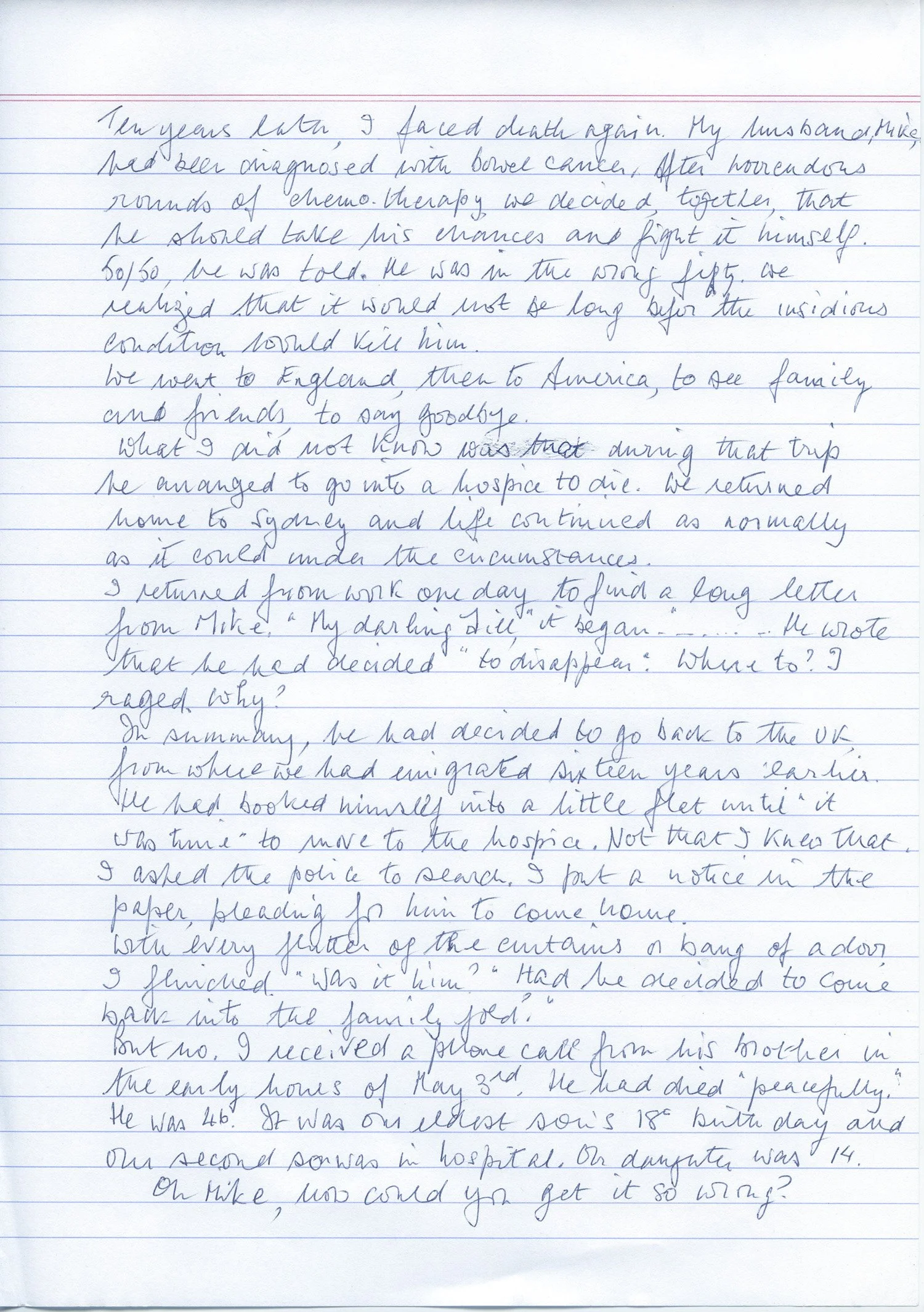
Ten years later, I faced death again. My husband had been diagnosed with bowel cancer. After horrendous bouts of chemotherapy, we decided, together, that he should take his chances and fight it himself. 50/50 he was told. He was in the wrong fifty. We realised that it would not be long before the insidious condition would kill him. We went to England, and then to America, to see family and friends and say goodbye.
What I did not know was that during that trip he arranged to go into a hospice to die. We returned home to Sydney and life continued as normally as it could under the circumstances.
I returned from work one day to find a letter from my husband, Mike. “My darling Jill”, it began. He wrote that he had decided to “disappear”. Where to? I raged. Why?
In summary, he had decided to go back to the UK, from where we had emigrated sixteen years earlier, and book himself into a little flat until it “was time” to move to the hospice. Not that I knew that. I asked the police to search. I put a notice in the newspaper, pleading for him to come home. With every flutter of the curtains or bang of a door I flinched. “Was it him?” “Had he decided to come back into the family fold?”
But no, I received a call from his brother in the early hours of May 3rd. He had died “peacefully”. He was 46. It was our eldest son’s 18th birthday, and our second son was in hospital, having a minor procedure dealt with. Our daughter was 14.
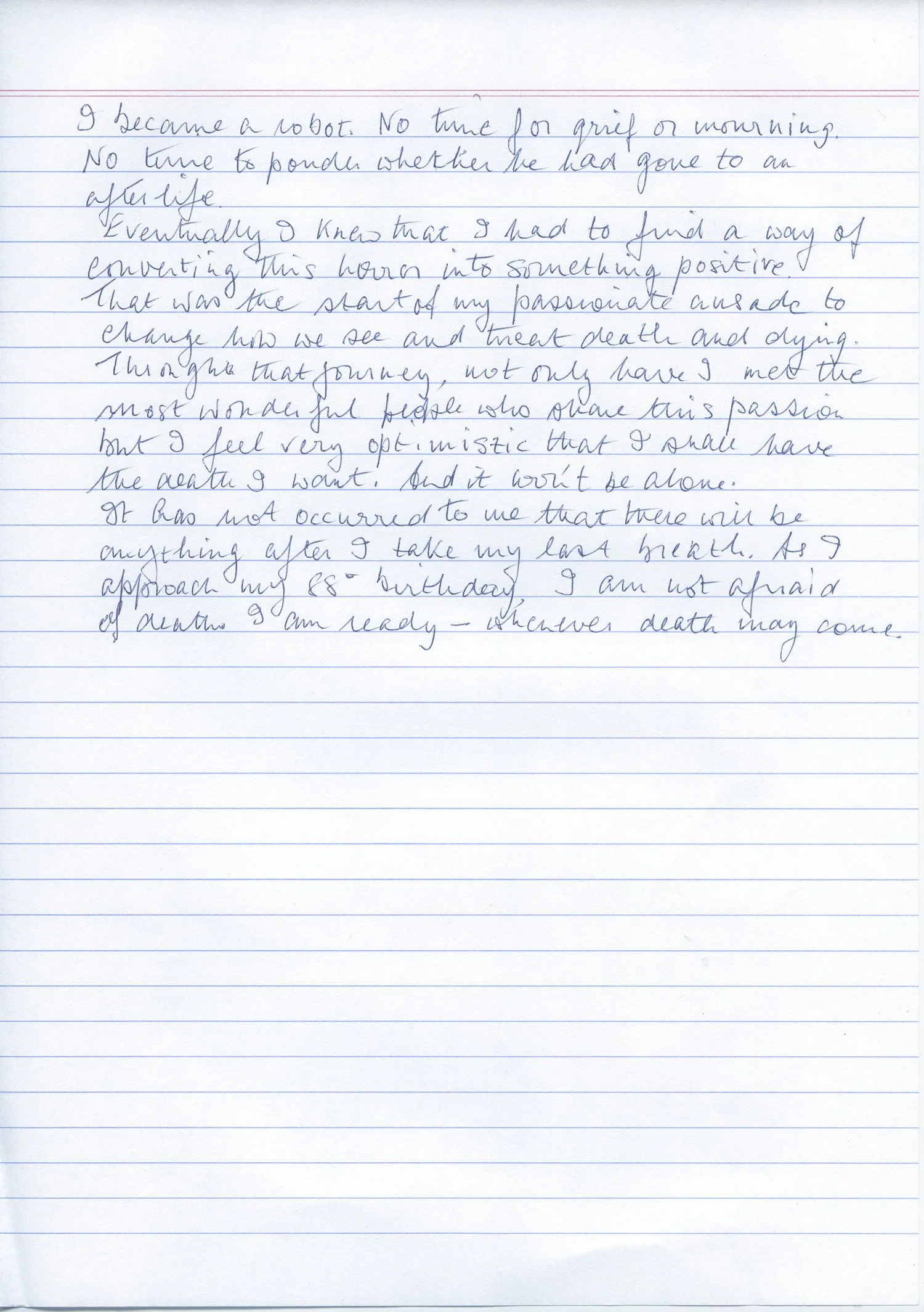
I became a robot. No time for grief or mourning. No time to ponder whether he had gone to an afterlife.
Eventually I knew I had to find a way of converting this horror into something positive. That was the start of my passionate crusade to change how we see and treat death and dying. Through that journey not only have I met the most wonderful people who share this passion, but I feel very optimistic that I shall have the death that I want. And it won’t be alone.
It has not occurred to me that there will be anything after I take my last breath. As I approach my 88th birthday, I am not afraid of death, I am ready—whenever death may come.
—Jill Nash (2026)
Editor’s note: Jill Nash had a long and varied working life from the arts and television to community development and strategic planning. A degree completed just before she turned 70, enabled her to teach English in Vietnam, Ecuador, Tanzania and Nepal. However, it is death and dying that she is now passionate about. Having lived the experience of death across three generations within her family, she is now an advocate for ageing and dying well. She designs and presents courses and seminars on the topic, and seizes every opportunity to promote death literacy and to accept death as something not to be denied but to be accepted and honoured.
The Death Letter Project welcomes your comments and feedback. Please feel free to leave a comment on our Facebook page or alternatively submit a message below.