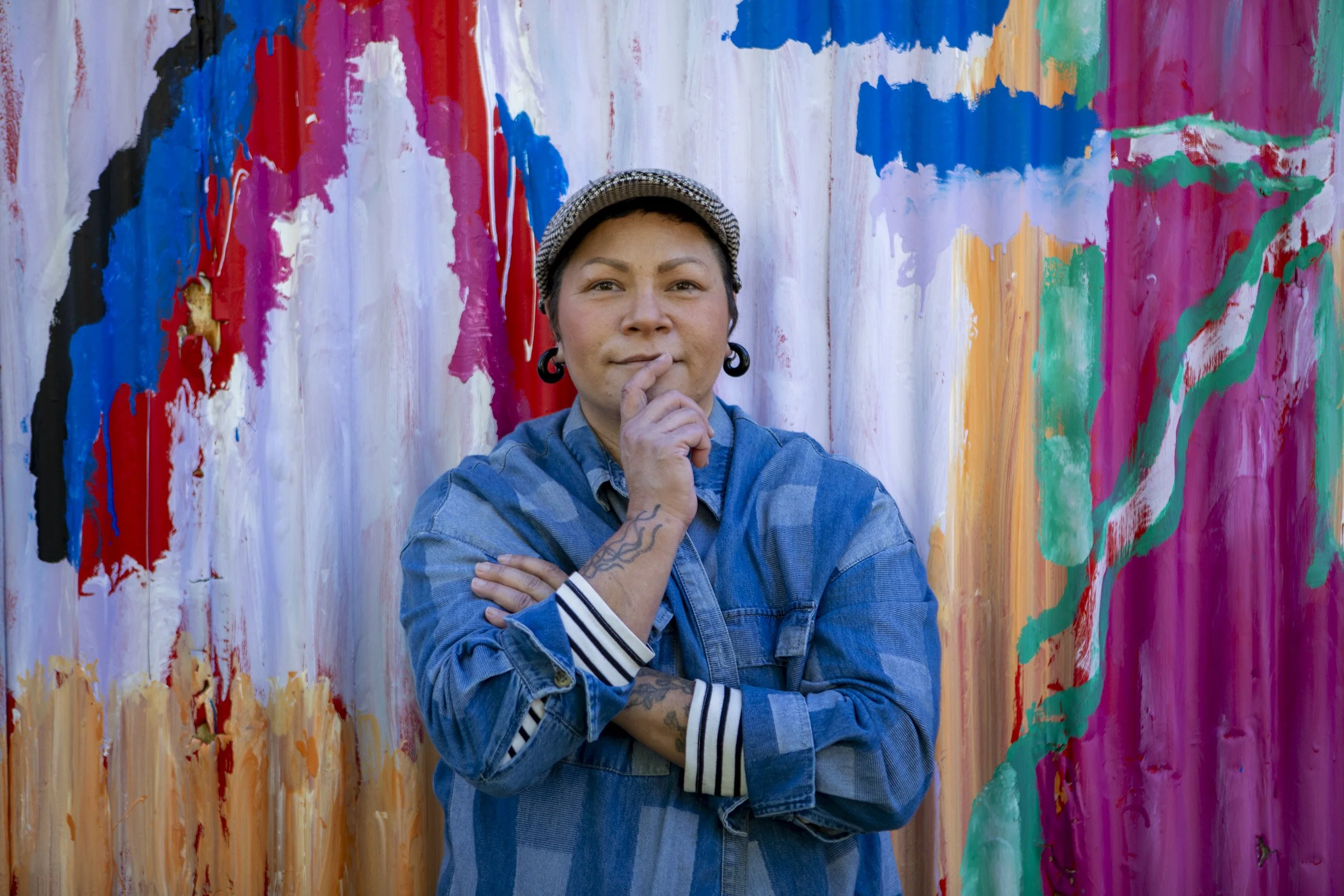
Hini Hanara | Decolonising Death Daddy / Co-founder of the Queer as Death Collective
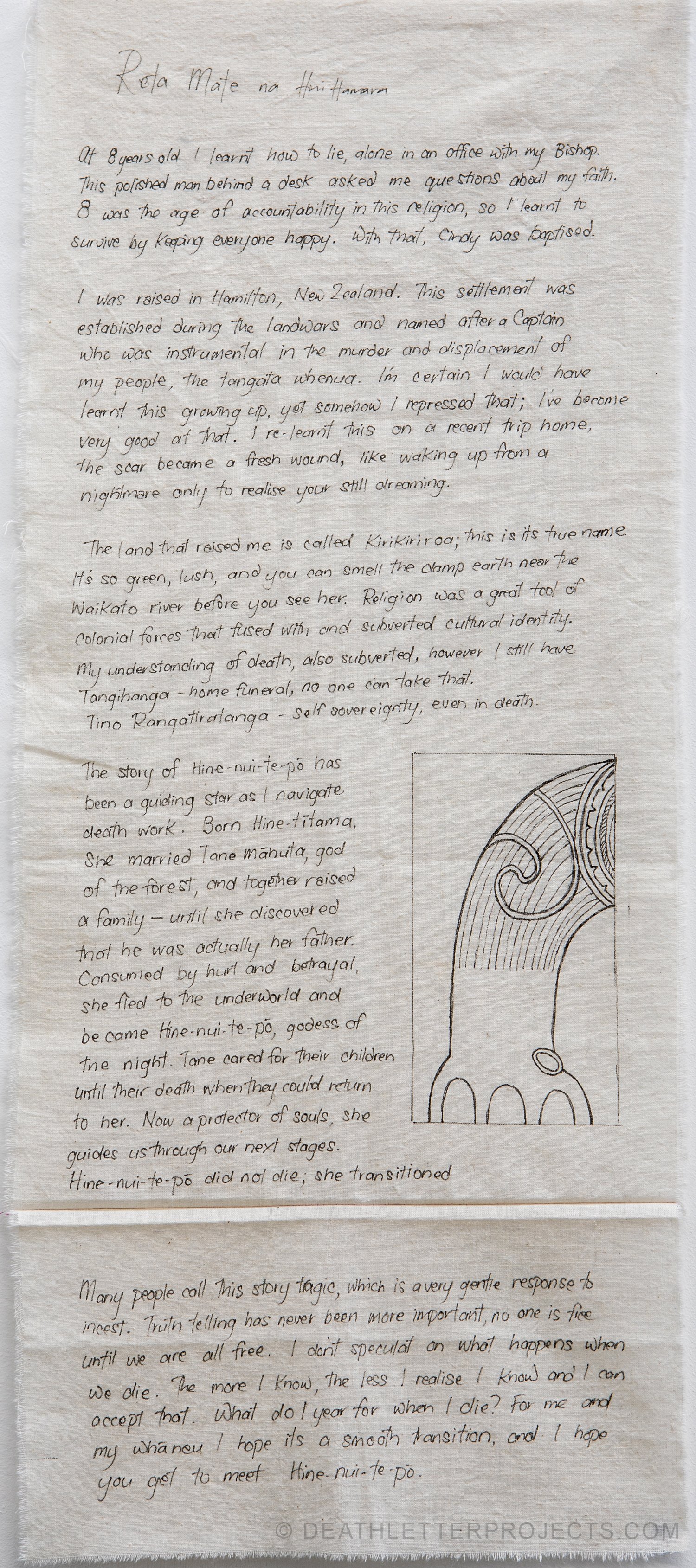
Reta Mate na Hini Hanara
At 8 years old, I learnt how to lie, alone in an office with my Bishop. This polished man behind a desk asked me questions about my faith. 8 years old was the age of accountability in this religion, so I learnt to survive be keeping everyone happy. With that, Cindy was baptised.
I was raised in Hamilton, New Zealand. This settlement was established during the landwars and named after a Captain who was instrumental in the murder and displacement of my people, the tangata whenua. I’m certain I would have learnt this growing up, yet somehow I repressed that; I’ve become very good at that. I re-learnt this on a recent trip home, the scar became a fresh wound, like waking up from a nightmare only to realise you’re still dreaming.
The land that raised me is called Kirikiriroa; this is its true name. It’s so green, lush, and you can smell the damp earth near the Waikato river before you see her. Religion was a great tool of colonial forces that fused with and subverted cultural identity. My understanding of death, also subverted, however I still have Tangihanga—home funeral, no one can take that. Tino Rangatiratanga—self sovereignty, even in death.
The story of Hine-nui-te-pō has been a guiding star as I navigate death work. Born Hine-tītama, she married Tane Māhuta, god of the forest, and together raised a family—until she discovered that he was actually her father. Consumed by hurt and betrayal, she fled to the underworld, and became Hine-nui-te-pō, goddess of the night. Tane cared for their children until their death when they could return to her. Now a protector of souls, she guides us through our next stages.
Hine-nui-te-pō did not die; she transitioned.
Many people call this story tragic, which is a very gentle response to incest. Truth telling has never been more important, no one is free until we are all free.
I don’t speculate on what happens when we die. The more I know, the less I realise I know and I can accept that. What do I yearn for when I die? For me and my whānau I hope it’s a smooth transition, and I hope you get to meet Hine-nui-te-pō.
—Hini Hanara (2026)
Editor’s note: Hini Hanara is a self-described Death Daddy, funeral ceremony maker, and the Co-founder of the Queer as Death Collective @queer.as.death. They identify as takatāpui, a Māori term for the LGBTQ+ experience. Hini (born Cindy) was born and raised through a staunch Mormon based faith, from which they have distanced and disassociated from, since their coming of age at 18. Hini seeks to advocate for acknowledgement of the Black and Rainbow family structures and rites of passage for LGBTIQA+ community.
The Death Letter Project welcomes your comments and feedback. Please feel free to leave a comment on our Facebook page or alternatively submit a message below.