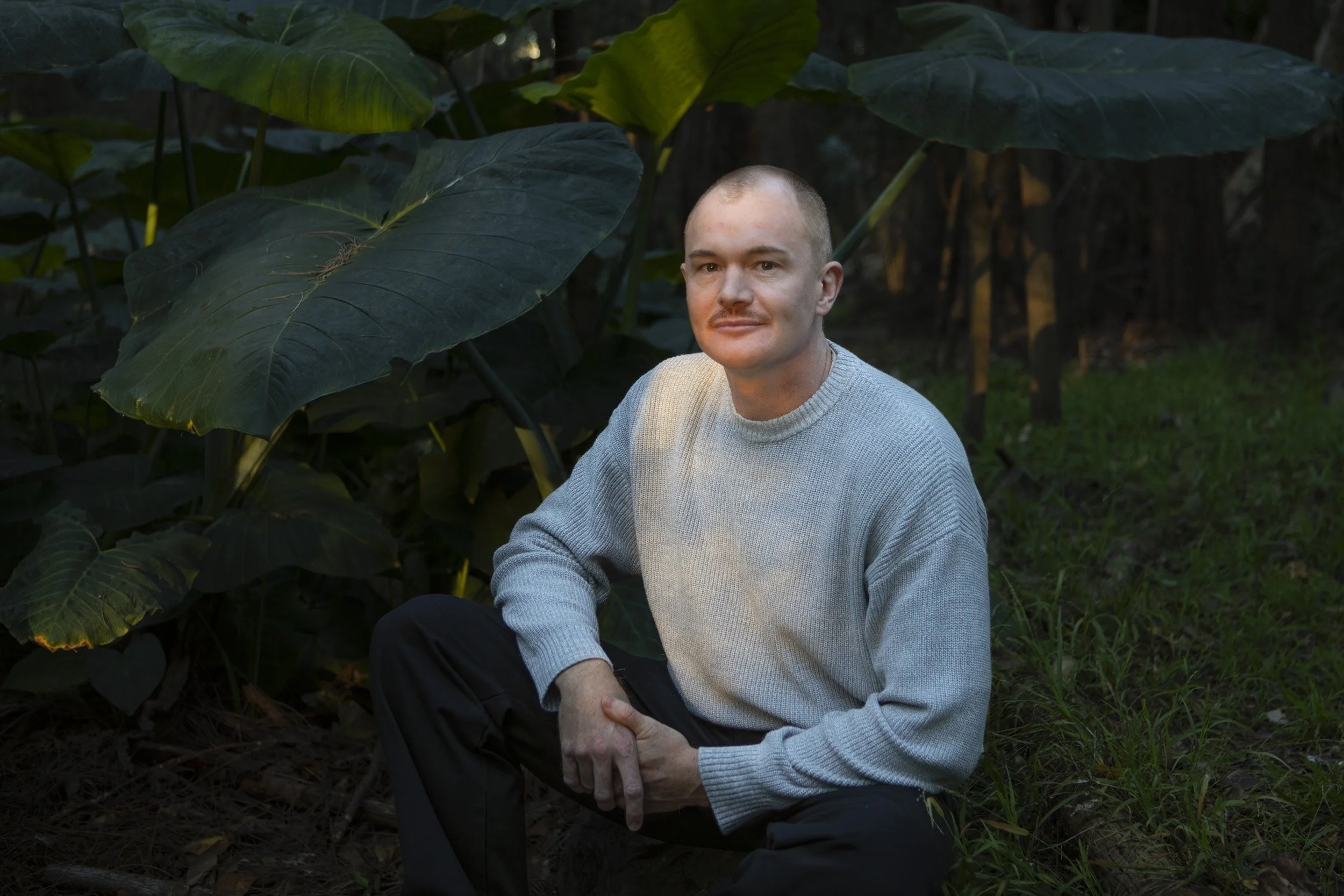
Ben Gibson | Funeral Director / Celebrant / End of Life Doula
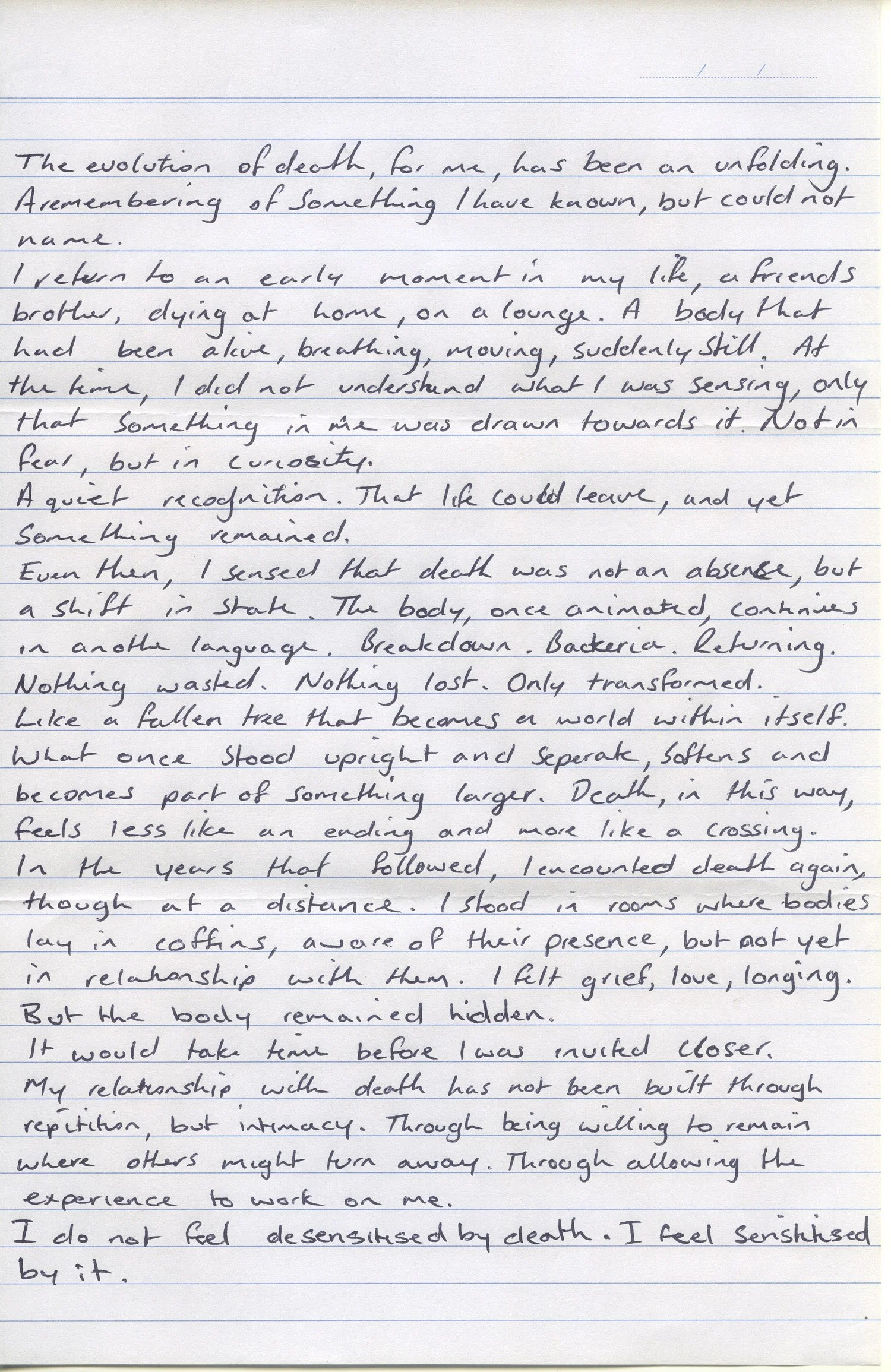
The evolution of death, for me, has been an unfolding.
A remembering of something I have known, but could not yet name.
I return to an early moment in my life. A friend’s brother, dying at home, on a lounge. A body that had been alive, breathing, moving, suddenly still. At the time, I did not understand what I was sensing, only that something in me was drawn toward it. Not in fear, but in curiosity.
A quiet recognition. That life could leave, and yet something remained.
Even then, I sensed that death was not an absence, but a shift in state. The body, once animated, continues in another language. Breakdown. Bacteria. Returning.
Nothing wasted. Nothing lost. Only transformed.
Like a fallen tree that becomes a world within itself. What once stood upright and separate softens and becomes part of something larger. Death, in this way, feels less like an ending and more like a crossing.
In the years that followed, I encountered death again, though at a distance. I stood in rooms where bodies lay in coffins, aware of their presence, but not yet in relationship with them. I felt grief, love, longing. But the body remained hidden.
It would take time before I was invited closer.
My relationship with death has not been built through repetition, but intimacy. Through being willing to remain where others might turn away. Through allowing the experience to work on me.
I do not feel desensitised by death. I feel sensitised by it.
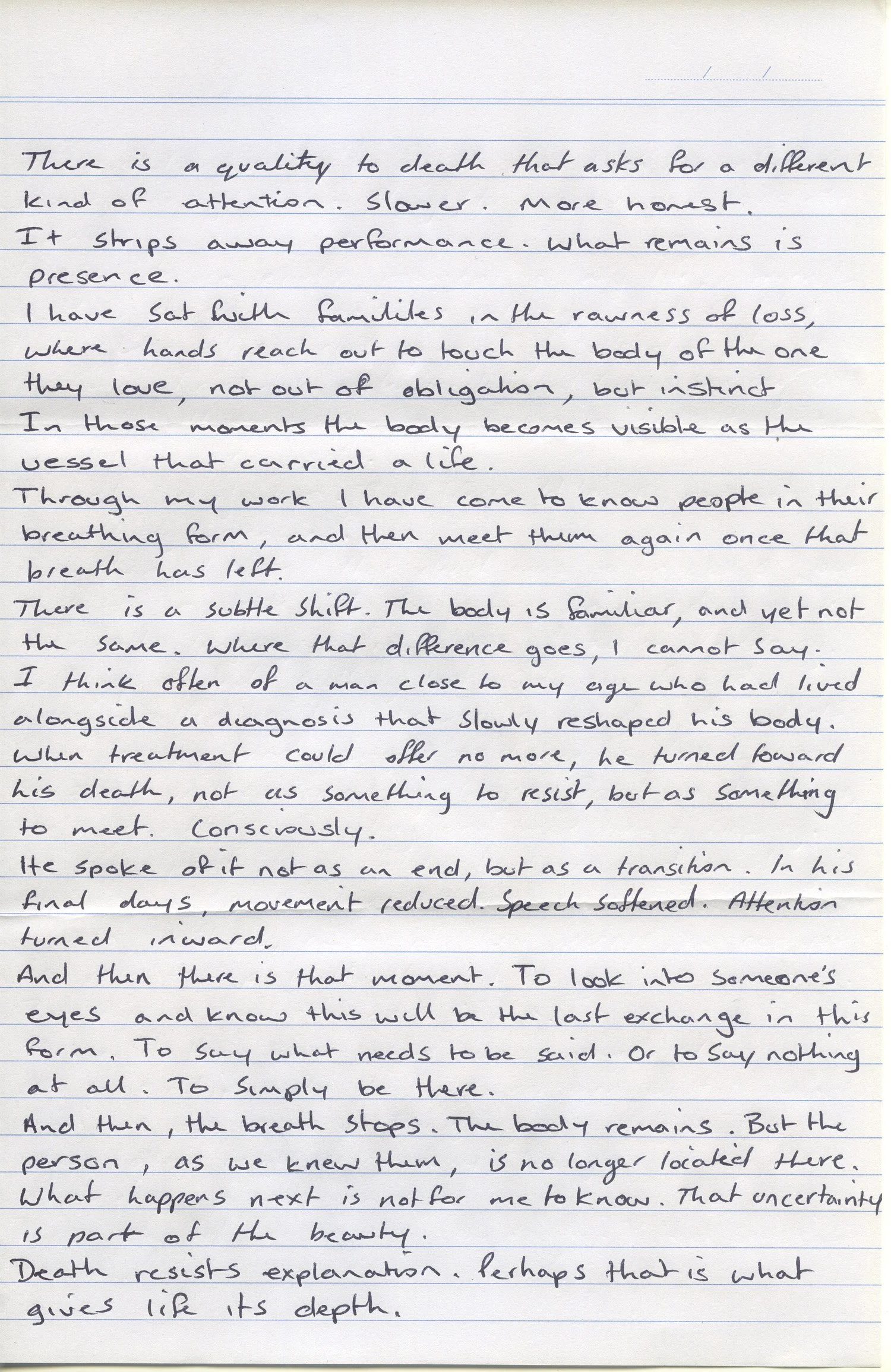
There is a quality to death that asks for a different kind of attention. Slower. More honest.
It strips away performance. What remains is presence.
I have sat with families in the rawness of loss, where hands reach out to touch the body of the one they love, not out of obligation, but instinct.
In those moments, the body becomes visible as the vessel that carried a life.
Through my work, I have come to know people in their breathing form, and then meet them again once that breath has left.
There is a subtle shift. The body is familiar, and yet not the same. Where that difference goes, I cannot say.
I think often of a man close to my own age who had lived alongside a diagnosis that slowly reshaped his body. When treatment could offer no more, he turned toward his death not as something to resist, but as something to meet. Consciously.
He spoke of it not as an end, but as a transition. In his final days, movement reduced. Speech softened. Attention turned inward.
And then there is that moment. To look into someone’s eyes and know this will be the last exchange in this form. To say what needs to be said. Or to say nothing at all. To simply be there.
And then, the breath stops. The body remains. But the person, as we knew them, is no longer located there.
What happens next is not for me to know. That uncertainty is part of the beauty.
Death resists explanation. Perhaps that is what gives life its depth.
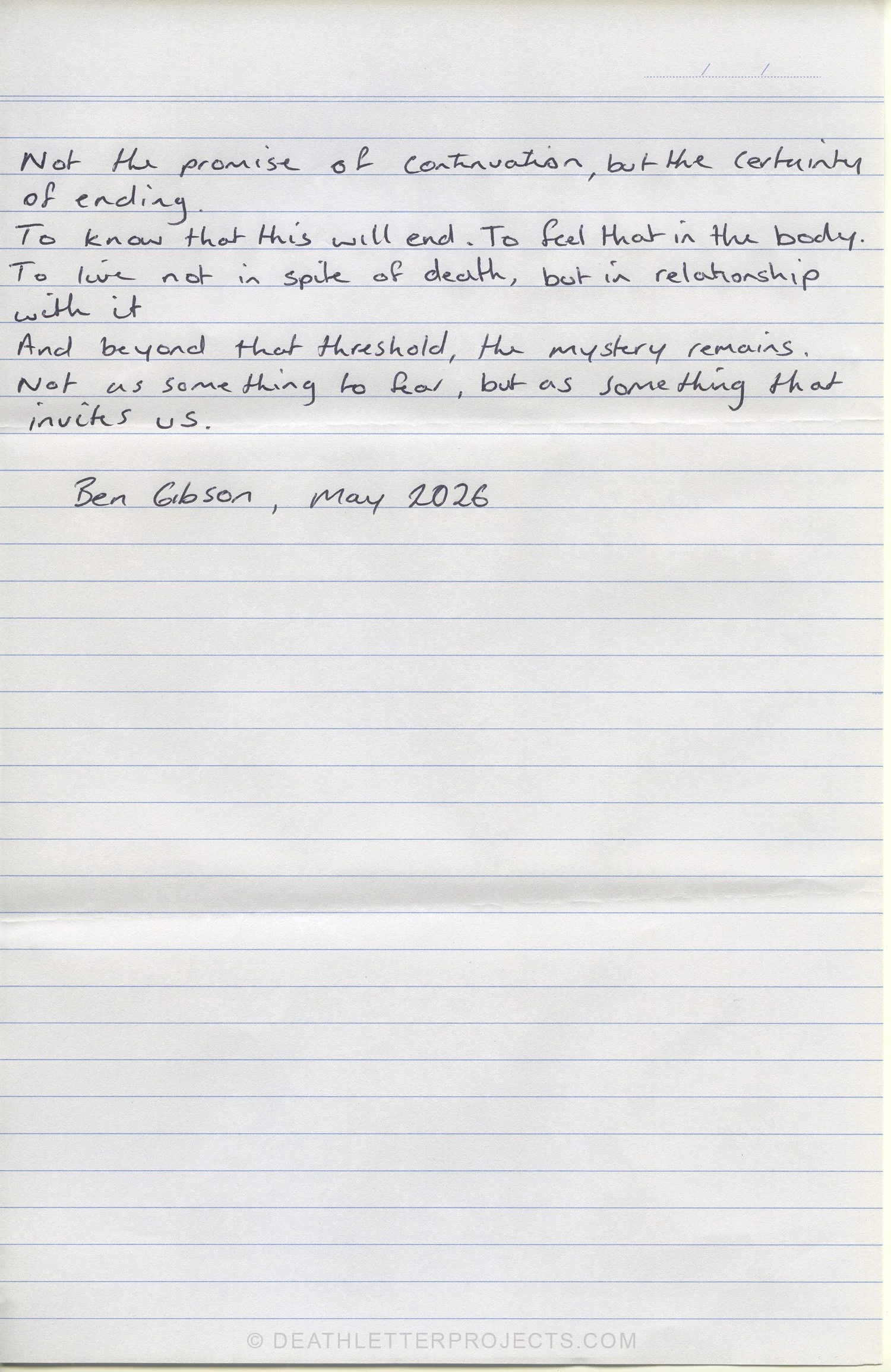
Not the promise of continuation, but the certainty of ending.
To know that this will end. To feel that in the body.
To live, not in spite of death, but in relationship with it.
And beyond that threshold, the mystery remains.
Not as something to fear, but as something that invites us.
—Ben Gibson (2026)
Editor’s note: Ben Gibson is a funeral celebrant, funeral director, end-of-life doula, and creator and host of The Mourning After podcast, which explores death, dying, grief, and loss through honest conversations, with a particular focus on the male experience. Further information: www.benjaminjamesendoflife.com
The Death Letter Project welcomes your comments and feedback. Please feel free to leave a comment on our Facebook page or alternatively submit a message below.